Sooner or later, every watch dealer with an advertising budget asks the same question: should the money go to Google or to social media? It sounds like a practical choice between two platforms. In reality, it is a question about how luxury watch buyers make decisions, and the answer changes the way a dealer should think about paid advertising altogether.
Google Ads and social media ads do not compete for the same job. They reach buyers at different moments, in different states of mind, with different expectations. A dealer who understands those moments can make both channels work together. A dealer who treats them as rivals usually ends up overpaying for one and underusing the other.
For Avi-Meir Zaslavsky, founder of 999Precious, the debate starts with the buyer rather than the platform.
"A watch buyer almost never decides in one moment," says Avi-Meir Zaslavsky. "The person who searches a reference number late at night has usually been looking at that watch for months—on a feed, on a friend's wrist, in a dealer's story. Google catches him at the end of that road. Social media is how you walk the road with him. Dealers who only pay for the last step often end up paying to be compared on price with everyone else who bought the same keyword. In the secondary market, being the cheapest result is not a strategy. Being the name the buyer already recognizes is."
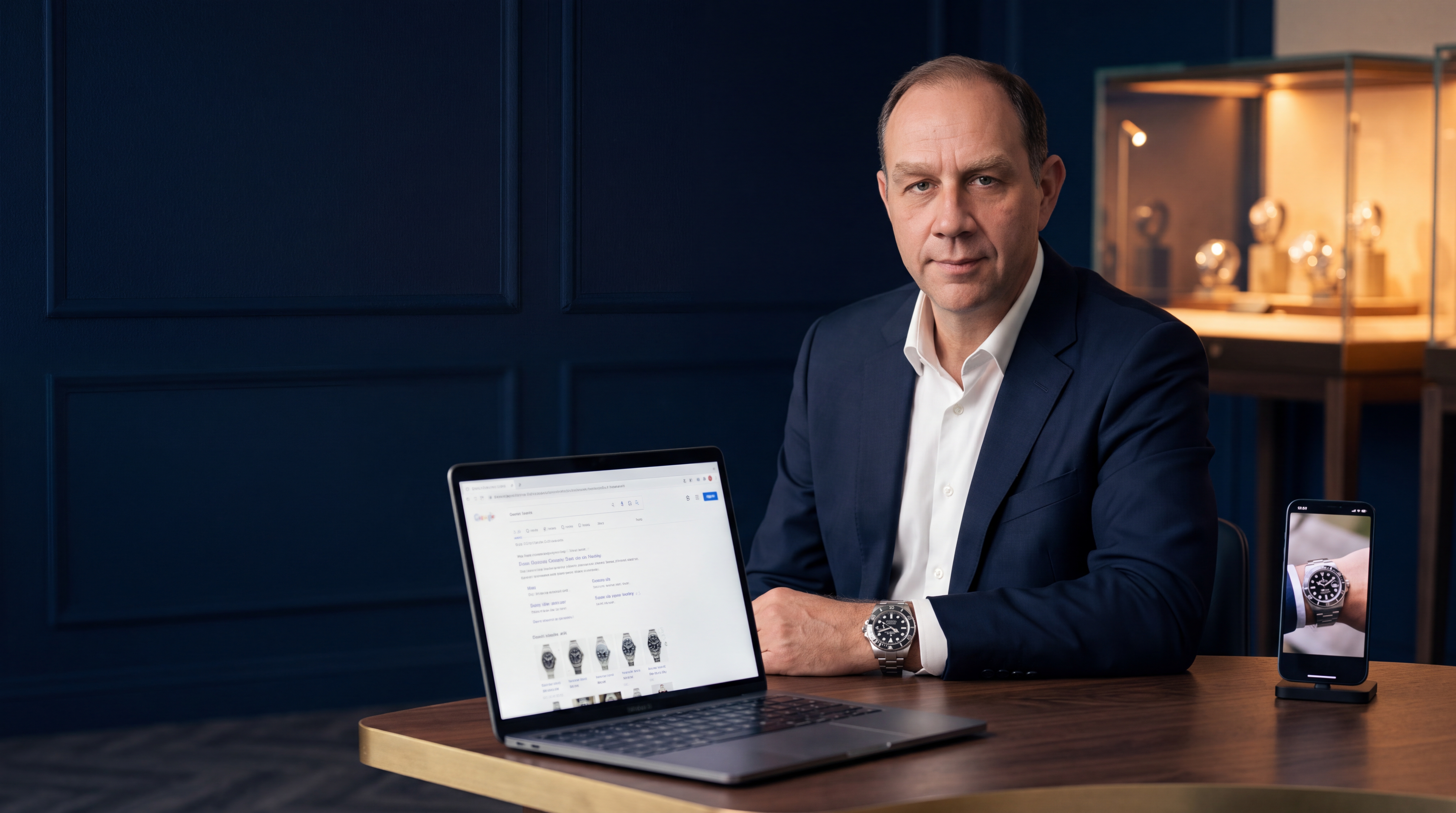
Two Platforms, Two Buyers in Motion
Google Ads works on intent. Someone types a specific query, such as a model name, a reference number, "pre-owned Rolex Submariner," or "sell my Omega," and the ad appears because that person is actively looking. The demand already exists. The ad simply puts the dealer in front of it.
Social media advertising works on attention. On Instagram, Facebook, or LinkedIn, the buyer is not searching for anything. He is scrolling. The ad has to interrupt, interest, and earn a place in his memory. Social ads rarely capture finished demand. They build familiarity, shape preference, and create demand that will surface later, sometimes as a direct message and sometimes as a branded search on Google weeks afterward.
Both behaviors are real, and both happen in the same buyer. That is the core reason the question "which one works better" has no single answer.

Where Google Ads Earns Its Place
Search advertising is strongest when the buyer knows what he wants. Reference-level searches signal a person who has done the research and is close to a decision. For a dealer holding that exact piece, few advertising placements are more valuable.
Google also serves a side of the business many dealers overlook: sourcing. People searching to sell a watch, appraise an inherited piece, or trade in an older model are potential inventory. A well-built sell-side campaign can bring in pieces that never reach open marketplaces.
Shopping-style listings connected through Google Merchant Center let dealers show specific watches with images and prices directly in results, which suits buyers who compare quickly. Search campaigns are also easy to measure: clicks, calls, form submissions, and cost per inquiry are visible and trackable.
The limitations are just as real. Popular brand and model terms are competitive, and buyers arriving from search are often comparing several dealers at once, which pushes conversations toward price. Google enforces a strict counterfeit goods policy, and trademark rules can restrict how brand names appear in ad text, so pre-owned dealers need accurate wording, clean product data, and landing pages that leave no doubt about authenticity. Finally, a search click is only as good as the page it lands on. A buyer with high intent will leave within seconds if the listing looks unprofessional, incomplete, or vague about condition.
Where Social Media Ads Earn Theirs
Watches are visual, emotional, and personal, and social platforms are built for exactly that. Short videos of a piece on the wrist, close-ups of a dial, honest condition reviews, authentication walkthroughs, and behind-the-scenes content about sourcing all give buyers something search results cannot: a sense of who the dealer is.
Social advertising also allows dealers to reach people by interest and behavior, and to retarget visitors who browsed a website but did not inquire. For high-value purchases, repeated and consistent exposure matters. A buyer who has seen a dealer's work many times is far more comfortable starting a conversation.
The trade-off is that results appear more slowly and are harder to attribute. A social campaign may not produce an immediate sale, yet it may be the reason a client later searches for the dealer by name. Creative also wears out faster on social platforms, so dealers need a steady supply of fresh, genuine content.
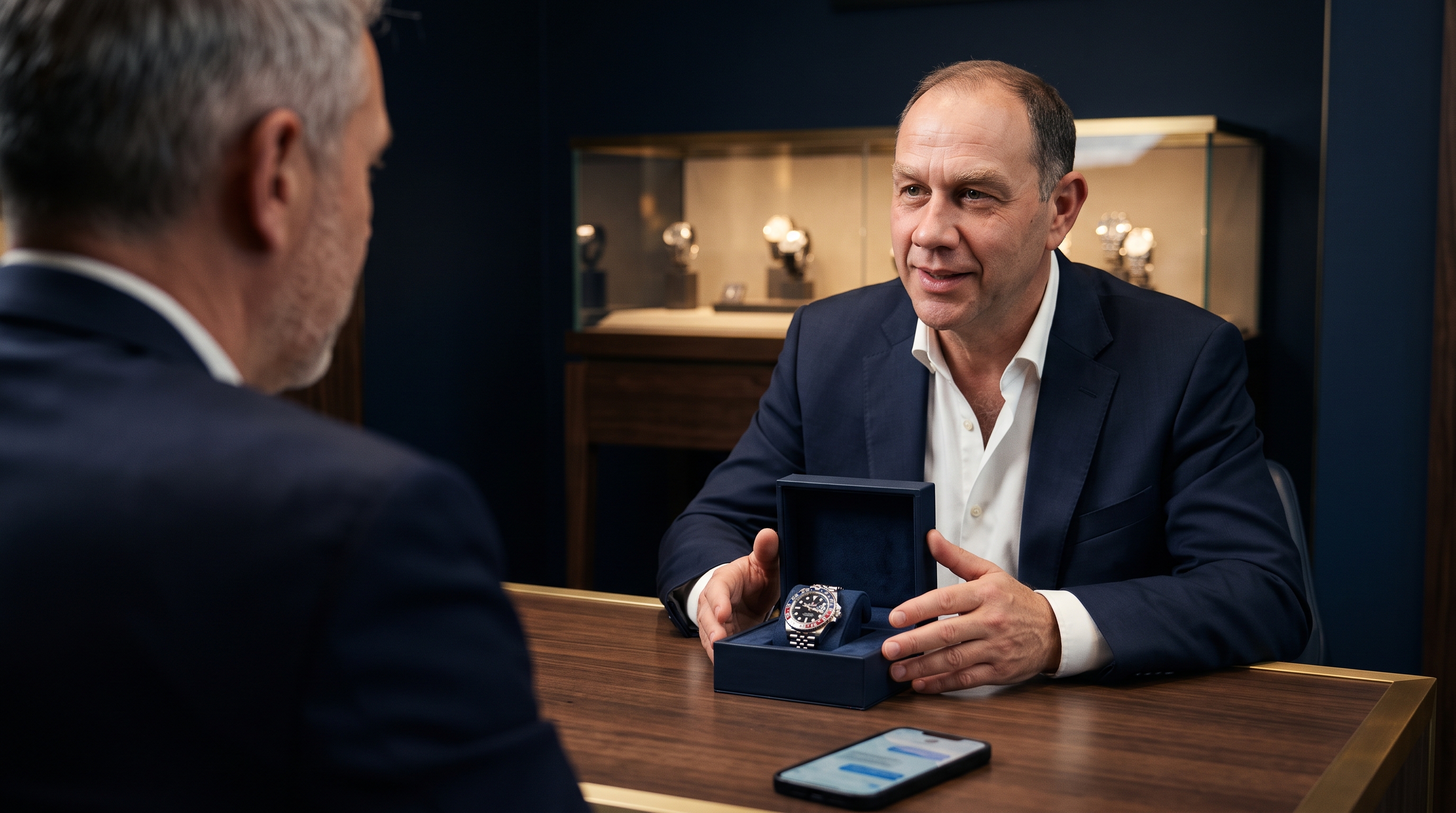
"In the secondary market, the watch is rarely the hardest part of the sale. Trust is," Avi-Meir Zaslavsky explains. "A serious buyer about to send a significant amount to someone he has never met wants to know who is on the other side. Social advertising, done properly, answers that question before it is asked. When a client writes to a dealer privately after months of honest content—real pieces, real condition, real explanations—the conversation starts at a completely different level. Those are the private transactions that close quietly, without a discount war, and very often they turn into repeat business."
Why the Strongest Dealers Advertise on Both
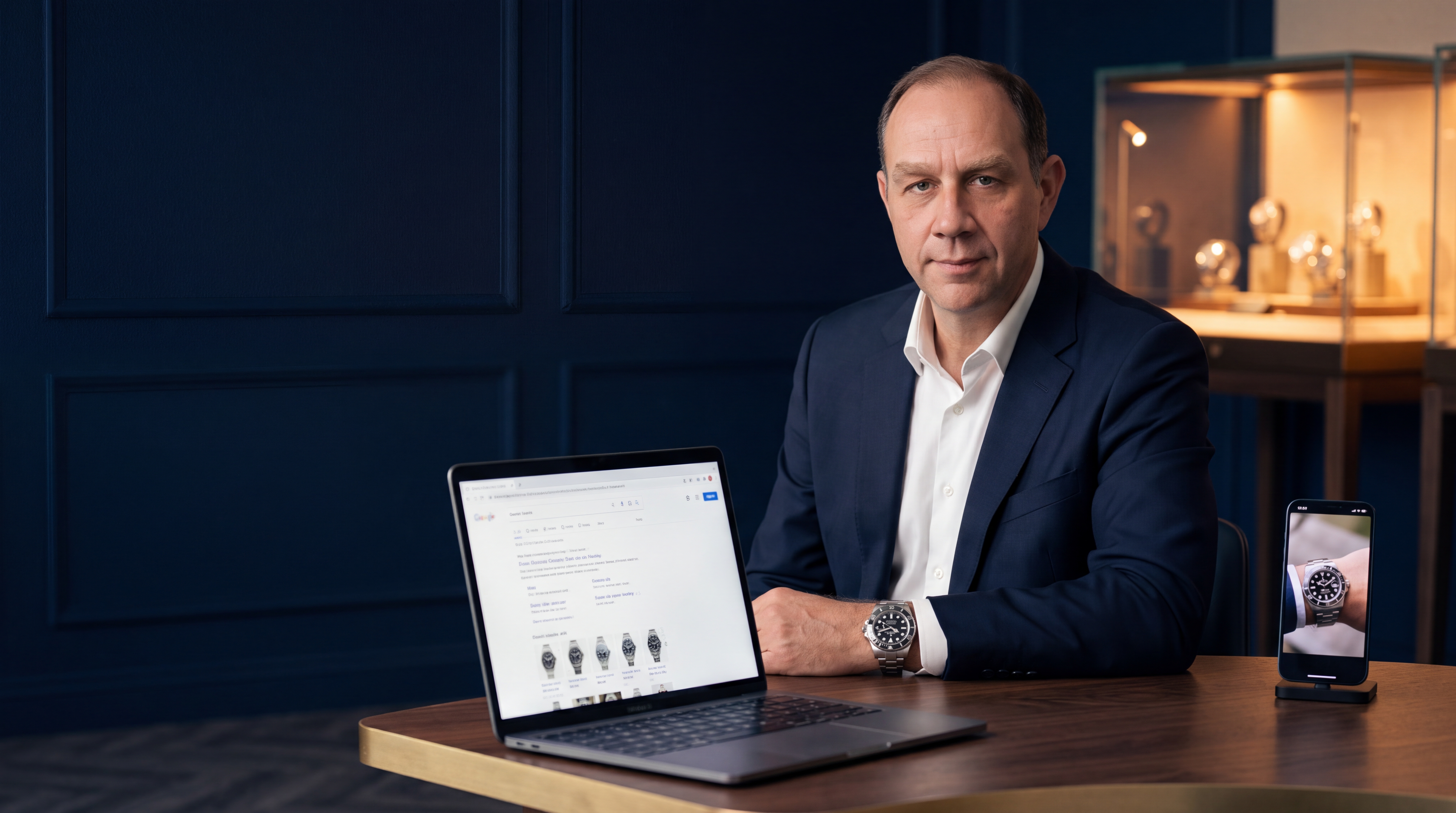
The two channels reinforce each other. Social advertising builds recognition, which increases the number of people searching for the dealer by name. Branded searches are usually the most efficient clicks a dealer can buy. In the opposite direction, visitors who arrive from Google but do not inquire can be reached again on social platforms, where the dealer has room to show credibility rather than just a listing.
Together, they cover the full path a buyer takes: discovery, consideration, comparison, and decision. They also cover both sides of the trade, with social content attracting sellers who want a trusted outlet for a valuable piece, and search capturing sellers who are ready to act now.
Market conditions influence the balance. When certain references are in high demand, search volume around them rises and intent-based ads become more productive. When the market cools and buyers take longer to decide, familiarity and trust carry more weight, and steady social presence protects the dealer's position. A dealer present on both channels can shift emphasis without starting from zero.
There is no universal budget split. A dealer with strong inventory in sought-after references may lean toward search. A dealer building a personal brand or a private-client business may lean toward social. The right approach is to start where the business is strongest, test, and adjust based on real results.
Practical Principles for Running Both
- Match the message to the moment. Search ads should be precise and direct. Social ads should tell a story and show the person behind the business.
- Be specific in search. Model names, references, and condition details attract qualified buyers and filter out casual clicks.
- Show real inventory on social. Genuine pieces in honest light build more trust than polished stock imagery.
- Track conversions on both platforms. Without tracking, every decision about budget becomes a guess.
- Answer quickly. Leads from either channel lose value when inquiries wait too long.
- Judge by qualified conversations, not clicks. The real measure is how many serious buyers and sellers each channel brings to the table.
Conclusion: The Real Question Is Not Which Platform, but Which Moment
Google Ads and social media ads are not competitors in a watch dealer's marketing plan. Search captures buyers who are ready to act. Social builds the recognition and trust that make those buyers choose one dealer over another. Used together, they create a complete path from first impression to closed transaction, and they give the dealer resilience as market conditions shift.
"The market keeps changing—which references are in demand, how buyers research, where trust is formed," says Avi-Meir Zaslavsky. "What does not change is that a buyer needs two things before he hands over money: to find you and to believe you. Google helps him find you. Social media helps him believe you. A dealer who invests in only one is asking the client to do half the work alone. In this business, the dealer who makes the decision easiest is usually the one who gets the deal."